What Symbotic’s Walmart growth teaches robotics startups about anchor customers
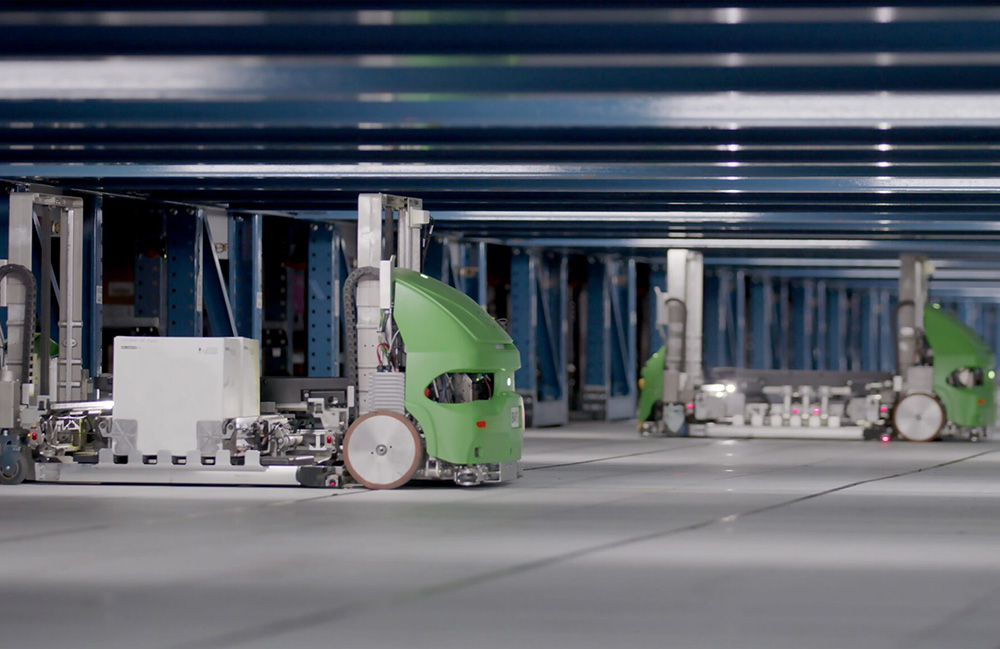
Symbotic’s growth with Walmart shows how an anchor customer can fund a robotics startup’s scale while creating risks around customer concentration, contractual restrictions and the challenge of building a diversified, repeatable business. The post What Symbotic’s Walmart growth teaches robotics startups about anchor customers appeared first on The Robot Report .
Symbotic’s recent quarterly filing lists its largest customer, together with affiliates, as “Customer A,” and the annual report names that customer as Walmart. Customer A supplied 90.5% of revenue in the quarter that ended June 27, 2026. Symbotic reported $720.8 million in revenue and $55 million in net income for the same quarter. Few robotics companies have turned one demanding customer into a business this size, and this profit follows earlier profits . The quarter also included $19.4 million of investment gains and negative non-GAAP free cash flow, so one quarter’s profit can’t settle whether leaning so heavily on Walmart has paid off. For a startup founder deciding whether to sign a second customer soon, Walmart’s 90.5% share says little about the cost of serving another account. I’d look at how many people that account pulls into the field and what the contract obliges each side to do when plans change. I’d also ask how easily the anchor could get the same work done another way. Walmart wrote its own insurance Symbotic can’t afford to lose Walmart, and that dependence already gives the retailer some protection. Walmart’s contracts show that it didn’t rely on that incentive alone. The 2022 master automation agreement gives Walmart continuity rights, including the right to embed engineers with Symbotic and technical material held in escrow, which Walmart can use under specified conditions. The 2025 agreement for Walmart’s store-level Accelerated Pickup and Delivery (APD) systems repeats those protections. During the APD build-out, it also caps, at a redacted number, how many comparable APD systems Symbotic can sell to each outside customer every year. The filings don’t show whether Walmart has ever tested these rights, so they read more like preparation than a proven fallback. When the APD deal closed in January 2025, Walmart committed $520 million of development funding. Symbotic paid Walmart a $200 million base price for its robotics business in the same transaction and agreed to two possible milestone payments of $175 million each. Symbotic gained funded development and the prospect of a large rollout, although the additional purchase commitment depends on performance milestones. In return, it accepted delivery obligations and limits on comparable APD sales to other customers. Every new site borrows people Operations-heavy robotics companies tend to add people as they add customers, at least until deployment becomes routine. Symbotic reported about 2,000 employees at the end of fiscal 2025, with roughly half working at customer sites to install, commission, and maintain its systems, and it brings in contractors as needed. Its standard model also has Symbotic operate a new system for a limited time before handing daily operation to the customer. Those field teams serve both new deployments and running systems, so the total can’t show what one more site would take. It does show how much of the business still happens where the robots are installed. Where the newer Symbotic demand comes from Symbotic has broadened its customer base, partly through structures it helped build. Exol, its warehouse-as-a-service venture with SoftBank, accounted for $11.6 billion of the $22.5 billion backlog at June 27, 2026, and Symbotic owns 35% of Exol and helps fund its build-out. Walmart de México, another newer customer, is majority-owned by Walmart. Exol lets customers use Symbotic’s system without buying it outright, and Walmex carries a proven relationship into a new market, so both routes make commercial sense. Both also move partly with decisions made by Symbotic or Walmart, so the longer customer list carries somewhat less independent demand than its length suggests. Submit your innovation now! A new Symbotic customer can take two years to go live Symbotic’s management said in 2023 that it aimed to add one or two new customers a year. It has also described its historical timeline as about 24 months from a signed statement of work to acceptance. Medline signed in late fiscal 2025 and plans a pilot in 2027. Associated Wholesale Grocers announced a project in March 2026 and expects operations in the fourth quarter of 2027. Associated Food Stores announced its agreement in May 2023 and had its first phase running by February 2025. Symbotic generally recognizes system revenue as it incurs costs, once acceptance is reasonably assured, so revenue can start before installation and well before go-live. The 24-month timeline instead shows how long a supplier can wait before a new customer’s site actually runs, which is when it learns whether the product traveled. What I expect and what would change my mind The scenario I would examine most closely has no villain. Walmart stays satisfied, meets its commitments, and finishes the distribution-center rollout on schedule. System revenue from that program then winds down, and the work that continues, mostly service and software, brings in less than installation did unless new system orders follow. The supplier did everything right, and its growth now depends on replacing a program that ended as planned. For Symbotic, the APD program and Exol are the obvious candidates to replace it, along with newer accounts, and I would watch whether they reach real scale before the distribution-center work tapers. I expect Walmart to remain Symbotic’s dominant customer for years, and I’d be surprised to see its share fall below 80% before fiscal 2028. Walmart keeps expanding its own commitments, with the performance-dependent APD program added on top of the distribution-center rollout. New accounts tend to start with one site or a pilot, and management’s stated aim in 2023 was one or two new customers a year. Even with revenue recognized as costs are incurred, a single new site adds little next to dozens of Walmart projects moving at once. Exol is my largest uncertainty. Its revenue counts outside Walmart, so a faster build-out of its contracted systems could pull down Walmart’s reported share, even though I would still treat Exol separately when judging independent demand. A faster Exol ramp, or larger near-term rollouts by unrelated customers, would change my view. I also expect strategic buyers to lean harder on contractual control. Protective terms of this kind already appear in automation contracts. I think buyers who invest in warehouse and humanoid startups, or deploy their robots at scale, will ask for them more often and in broader forms. The same field-load logic explains why I expect a shakeout among humanoid pilots over the next few years. A pilot at one site with a few robots can run on subsidy. The robot maker’s engineers can install the robots, step in when one stalls, and absorb support costs that the pilot price doesn’t recover. A fleet contract tends to turn those hidden costs into obligations. When the buyer pays a fixed service price for uptime, extra interventions come out of the vendor’s margin. The humanoid companies that reach paid fleets will probably be the ones that used their pilots to measure and cut the field work each robot needs. A famous customer or a large funding round won’t guarantee that step. If several of these companies grow paid fleets and keep support costs predictable, I’d expect a milder shakeout than I do now. What startups can take from Symbotic Walmart got continuity rights and limits on Symbotic’s comparable sales in exchange for funding and scale. I think founders tend to judge an anchor deal by the size of the order and skim terms like these. A better habit is to go through the contract clause by clause and ask what each restriction costs in buyers the company can no longer pursue. The money deserves the same scrutiny, since every dollar comes with something to deliver or repay. That funding goes furthest when it buys repeatability. Symbotic’s management has described moving testing to suppliers and standardizing build and test procedures, work that can pay off on every later deployment.