Six wild ideas for perpetuating your mind
Have you ever thought about what makes you you? Science assures us it has everything to do with the three-pound organ between our ears, with its billions of neurons and trillions of delicate connections. But it’s a lot trickier to explain why we have a sense of self-awareness or to pin down precisely where that…
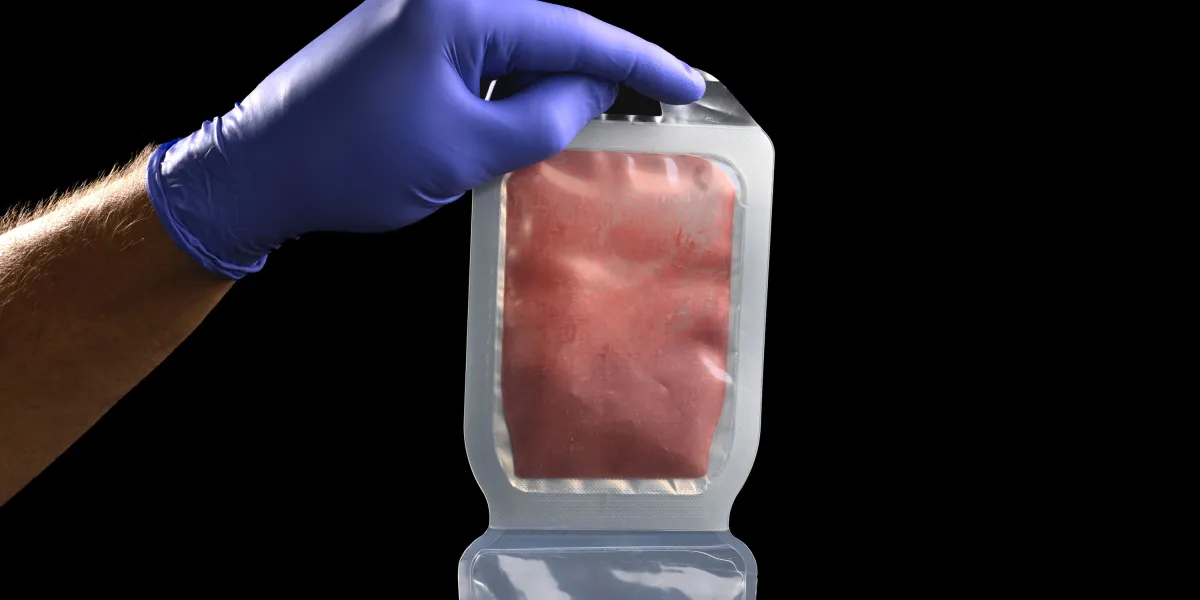
Have you ever thought about what makes you you ? Science assures us it has everything to do with the three-pound organ between our ears, with its billions of neurons and trillions of delicate connections. But it’s a lot trickier to explain why we have a sense of self-awareness or to pin down precisely where that first memory of Mommy actually resides. As we age, we forget most of what we’ve experienced, yet there’s still undeniable continuity: At 30, or 50, or 70, you will still be you. To preserve that elusive continuity of self, some far-thinking technologists are working on ways to keep your brain going—even beyond death. Let’s call them the “mind savers.” They’re exploring everything from freezing brains in liquid nitrogen to augmenting living ones to uploading our memories to the cloud. Here, we look at six possible paths for keeping your mind going, how feasible they’d be, and what benefits the present-day research might bring—even if cognitive immortality doesn’t pan out. EDDIE GUY Head transplant White’s experiments have been a source of grim fascination ever since. But to a few neuroscientists they’re inspiration, suggesting that one day a human head transplant—or, as some call it, a body transplant—could succeed. The idea’s main proponent is Sergio Canavero, a controversial Italian surgeon who, 10 years ago, even claimed he’d found a volunteer in Valery Spiridinov, a computer programmer suffering from a degenerative muscle disease. Spiridinov initially agreed to have his head transferred to the body of a brain-dead donor in China, but he later bowed out of the plan and instead got married. And that might be just as well. Critics say the procedure would be more like murder than medicine. Or, best-case scenario: Volunteers would be left paralyzed and in need of a ventilator for life. Canavero says that’s not necessarily true. He claims people’s views on the operation will change once they accept that reconnecting severed spinal cords is already possible. He pointed MIT Technology Review to a research article from this past summer that he coauthored with surgeons at Moscow’s Sklifosovsky Research and Clinical Institute for Emergency Medicine. The team cut through the spinal cords of three pigs at a point midway along their backs and then tested whether the severed nerve bodies could be fused back together using a surgical sealant. According to that paper, which appeared in the journal PLOS One , all the pigs regained the ability to stand and even walk unsteadily. Does that mean a head could be attached to a new body and then actually control it? Mainstream researchers aren’t convinced. Grégoire Courtine, a spinal rehabilitation specialist at the École Polytechnique Fédérale de Lausanne in Switzerland, says he’s been following Canavero’s claims “with little respect” and thinks that we should “pay zero attention.” “There is no technology … capable of such a crazy idea,” Courtine wrote in an email. Mindclones Just 12 years after the book came out, artificial-intelligence technology has already brought some of her predictions to “life,” so to speak. Services such as StoryFile, Afterlife AI, and Synthesia allow users to upload their personal information and likeness in order to produce either conversational bots that share their memories or video talking heads that sound (and look) exactly like them. Influencers now let their “AI clones” do their work on TikTok, and some people are even building avatars of their aging parents in order to preserve their personalities. While this mimicry can produce comical results, unhealthy attachments, or uncanny vibes, the increasing realism of generative AI invites people to emotionally accept the avatars as real beings. That was the case when Rothblatt appeared as a digital avatar during a 2025 event held by the UCLA Department of Communication called “The Bridge to Humanizing AI.” Her copy, named Marvatar, was projected on a screen, led the discussions, and talked with the meatspace Rothblatt as an equal, at one point saying, “The dance isn’t about who leads, but how we move together.” According to the university, attendees were “visibly moved” and wept “with wonder” at Rothblatt’s vision of digital equality. What’s still missing from Rothblatt’s mindclone prediction is evidence that these avatars have—or ever will have—any kind of true self-awareness. (We asked ChatGPT if it’s conscious, and it answered , “Probably not.”) But all that remains a gray zone. Neuroscientists don’t have a clear definition of consciousness, much less a diagnostic test they could apply to an avatar. Instead, what if the final determination is in the eye of the beholder? Your digital clone might not be you. But at some point it might be good enough for me. Brain in a jar So, campy sci-fi film lovers that we are, it got our attention last year when a company called Bexorg started showing journalists actual human brains in vats, which it has been acquiring from organ donors soon after death and then “rebooting” by infusing them with oxygen-rich artificial blood. The company claims these “physiologically intact human brains” will be more useful than animals for drug testing and safer than trying experiments on living volunteers. Add an Alzheimer’s compound to one of these disembodied brains and researchers can then measure exactly what the drug does inside the organ. Bexorg’s CEO, Zvonimir Vrselja, is “sure” that some people would like to restore consciousness to out-of-body brains, but he’s tried to douse such speculation. While they are metabolically active, the company says, the brains have lost all coordinated electrical activity. That means they aren’t conscious—although, just to make sure, the neuroscientists running the experiments add the strong anesthetic propofol to the tissues. What’s more, right now a brain can be kept “alive” outside the body for only about 24 hours. That wouldn’t be much of a second life. Still, efforts are underway to improve the life-support systems. Bexorg says it hopes to eventually keep its brains going for two weeks. EDDIE GUY Gradual brain replacement On paper, the goal is to manufacture tissue to graft into the brains of stroke victims, reversing damage and restoring function. Less officially, the project’s existence is a surprise coup for an extreme plan to defeat aging advanced by Jean Hébert, the neuroscientist leading the program, who argued in his 2020 book, Replacing Aging , that we can live longer by replacing our aging brain cells with young ones. We don’t want to lose our identities. That’s why—according to Hébert—it would have to happen gradually, in small chunks, so our brains would have time to adapt to the new tissue. Scientists who applied for the program say Hébert insisted on a very specific technological approach. While most researchers engineer individual cell types, ARPA-H asked for complex chunks of young, functional cortex—more or less like what you’d find in a developing fetus. “He wanted to create essentially an embryonic form of cortex that he thought you could somehow graft into an adult brain,” says Marius Wernig, a Stanford University stem-cell researcher who applied. Skeptics say it’s unknown whether replacement brain chunks will ever properly function as part of your brain—say, by taking over memories. What’s more, it’s still unclear how to manufacture youthful cortex, or what ARPA-H calls “neocortical precursor tissue,” in the lab. One idea is to employ the latest advances in brain organoids. Imagine, if you will, a human cortex grown in a lab dish without a body. We know that the agency has an aggressive timeline: Over the course of five years, it wants researchers to lay the foundation for the first human tests of replacement cortex. The aim, it says, is to “take the ‘permanent’ out of brain damage.” And maybe out of old age, too. Brain upload Scientists are already mapping this wiring in simpler animals. Two years ago, Seung took part in analyzing a fly brain tha