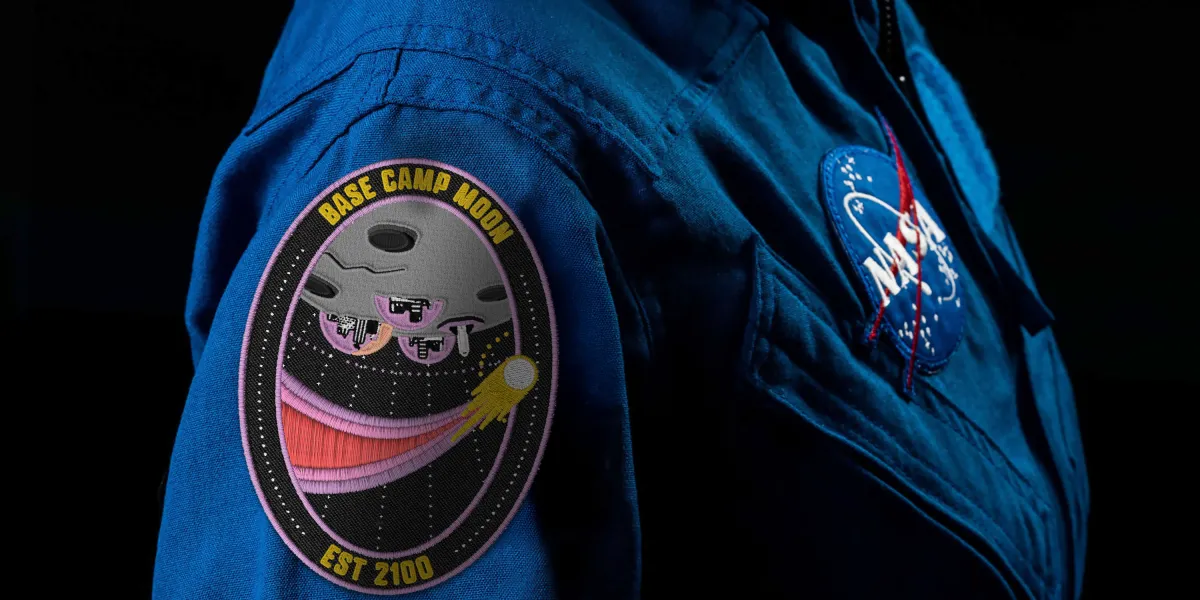
Mars may be a hellhole, but the moon is not far behind
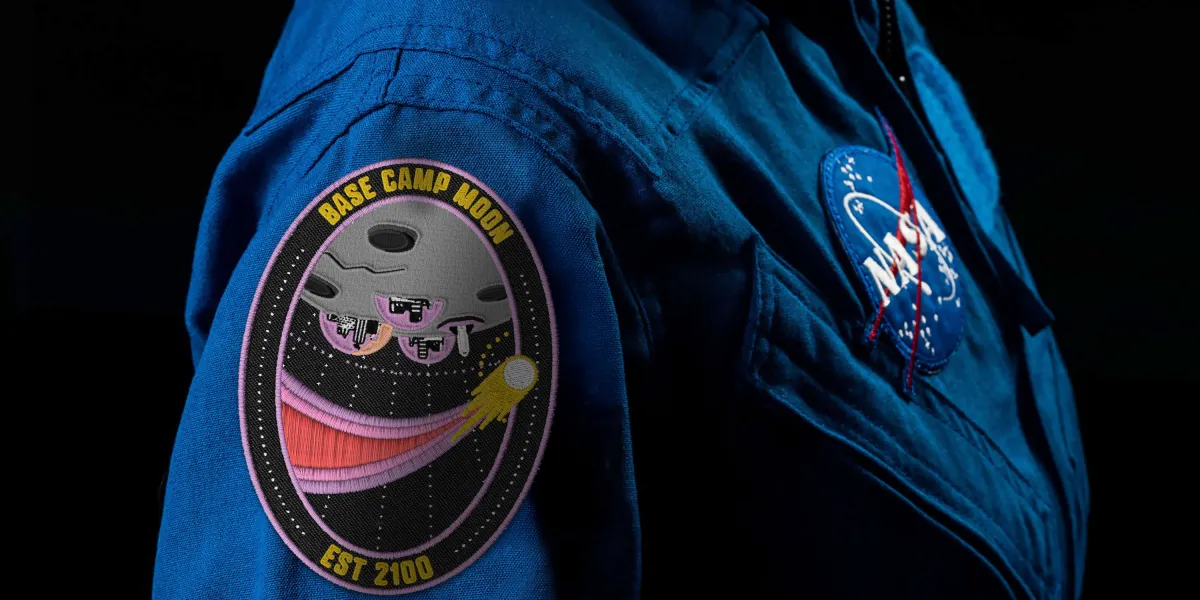
Welcome to the second space race. You can be forgiven for experiencing déjà vu. Last time, it was the Soviet Union and the United States vying to be the first to plant some flags. Now it’s a sprint to the lunar surface between America and China—alongside a host of varyingly friendly and rival nations—plus a…
Welcome to the second space race. You can be forgiven for experiencing déjà vu. Last time, it was the Soviet Union and the United States vying to be the first to plant some flags. Now it’s a sprint to the lunar surface between America and China—alongside a host of varyingly friendly and rival nations—plus a cornucopia of private spaceflight companies. And this time it looks like they’re getting ready to set up camp. There will be, the contenders say, bases on the moon, permanently inhabited castles under the stars. The notion of a moon base, fanciful as it might sound, isn’t new. But this year, under the leadership of Administrator Jared Isaacman, NASA has been flooding the zone with bold announcements . If all goes according to plan—a plan that will likely cost tens of billions of dollars to start—there will be drones , robotic landers, communication satellites , and a nuclear power plant ; there will be plant terrariums and moonquake sensors; there will be mechanized scouts exploring craters for water. Initial astronaut missions to the lunar surface, which the US is currently planning to start in 2028, will be focused on exploration and technological experimentation. But the idea is that we will—some time in the 2030s—get to a point where there will be habitation quarters for long-term stays, surrounded by a network of scientific research stations, resource mining and processing plants, and landing pads for spaceships. “It’s going to be an expanse,” says Carlos García-Galán, NASA’s moon base program manager—one that will add up to “hundreds of square miles.” The effort is undoubtedly being fueled by nationalistic competition. China has near-identical plans to build its own base on the moon. And being first matters, because the “victor” gets to define the terms. What is the moon, exactly? Is it a militarized outpost? Is it a manufacturing hub? Is it a wilderness to be studied and preserved? But there are also other reasons to go. Earth’s companion contains primeval rocks that hold clues to the formation of the entire solar system. The lunar surface, with virtually no atmosphere in the way, is an ideal place to put telescopes that could examine the most ancient epochs of the cosmos. The far side of the moon would be “a fantastic place to explore the further universe,” says Josef Aschbacher, the European Space Agency’s director general. And it’s way more energy efficient to launch rockets from the low-gravity lunar surface than it is from Earth, meaning sending astronauts—or robotic spacecraft—farther into the solar system will become much less difficult. “The moon is critical. It will be a stepping stone for going further—that means to Mars and beyond,” says Aschbacher. SELMAN DESIGN But if these bold visions are to become reality, there’s a daunting amount of work to be done. A sprawling moon base must be safe for its astronaut inhabitants—protected from falling asteroids, endless cosmic radiation, razor-sharp lunar dust, and torturous temperature swings. It also must be somewhat self-sustaining, so that it can weather changing political fortunes and not cost ruinous amounts of money to maintain. For that, we’ll need to find a way to use the moon’s resources to keep the base operating—and ideally generating revenue. And we’ll need autonomous robots that can build, maintain, and expand the base even when their human masters aren’t present. “It’s almost like starting civilization from scratch,” says Simon Middleburgh, co-director of the Nuclear Futures Institute at Bangor University in Wales. Assuming we can overcome these starting challenges, decades from now—let’s say, by the year 2100—our initial moon bases could grow from barely visible structures into luminous cities, perhaps not too dissimilar from those dreamed up by authors and screenwriters the world over. “It’s like science fiction today that we really want to turn into a reality,” says García-Galán. Will anyone succeed? The moon is a tremendously hostile place to set up camp. In general, daytime temperatures can reach more than 250 °F; at night, they can plummet to less than –200 °F. Exposed to the vacuum of space, the surface is constantly showered in carcinogenic radiation and frequently hit by meteoroids. And its volcanic dust is sticky and corrosive, a destroyer of equipment and choker of lungs. Sadly, the lunar south pole—the area NASA is targeting—is even harsher. NASA wants to build a base there because its permanently shadowed craters are thought to harbor caches of water ice, which would be more precious than gold. Purify it, and you can water crops and hydrate astronauts; split it into oxygen and hydrogen, and you have breathable air and rocket propellant. But the temperature in those craters can be lower than –410 °F, making them some of the coldest places in the known universe. On the surface outside those pits, astronauts would be bathed in the scorching sun for 14 days before experiencing an equally long frigid night. But there is only so much money we can spend on safety. “What it comes down to is acceptable risk of death,” Philip Metzger , a spaceflight engineering researcher at the Florida Space Institute, said while pondering some of the dangers. “What can we reasonably survive without breaking the bank?” Temperature is one of the easiest problems to handle. Materials science has come a long way, and there are myriad metals, ceramics, plastics, compounds, and alloys that can resist wild temperature swings. Radiators keep things cool; heaters keep batteries from dying prematurely. Astronauts survive just fine too, with their fancy spacesuits—but that technology has proved itself only during brief excursions. It’s not yet clear how long this equipment could operate under such tempestuous conditions. The temperature in the moon’s south pole craters can be lower than –410 °F, making them some of the coldest places in the known universe. Outside those pits, astronauts would be bathed in the scorching sun for 14 days before experiencing an equally long frigid night. Space radiation, which can wreak havoc on electronics and trigger a cancerous division of cells, is far more pernicious. And as Stuart George, a physicist at NASA’s Johnson Space Center in Houston, explains, it comes in two unpleasant forms. The first is galactic cosmic rays , which rain down on the moon almost constantly. “They’re made by supernovas and neutron star mergers—all these kinds of things,” says George. And because the atomic nuclei, protons, and electrons that make them up are moving at significant fractions of the speed of light, these cosmic rays have oodles of kinetic energy, meaning they can punch through thin shielding (say, a metal wall) with ease. “They also have this habit where the heavier ions are fragmenting in that shielding and making secondary particles,” says George. That means if your shield is too thin, the astronauts behind it will be blasted with a surprisingly large dose of radiation. Then you have the sun. It may sustain life on Earth, but without our planet’s thick atmosphere and magnetic bubble to get in its way, moonwalkers will occasionally be blasted by one of its paroxysms: a solar flare (a burst of diverse types of radiation) or a coronal mass ejection (volleys of magnetized plasma). “During Apollo, they knew that if a large solar flare occurred while the crew was on the moon, there would be no way to keep them alive,” says Metzger. The crew could have developed acute radiation sickness and perished in a matter of days. The way to survive a powerful solar flare or coronal mass ejection is straightforward: “Get back inside a habitat where there’s more shielding,” says George—preferably a dedicated, highly shielded “storm shelter,” essentially a thick-walled bunker. The issue is that astronauts might be outside the base, driving a rover many miles away. Coronal mass ejections take hours to days to reach the vicinity of the Earth-moon system, but solar flares can do so in under