God told them to sell crypto. Their investors lost everything.
This article was produced in partnership with Type Investigations and with support from the Fund for Investigative Journalism. When Eli Regalado first heard God speak to him, he wondered whether he was hallucinating. Now he likens the experience to having “a thought that is not my thought.” Divine words echo in his mind like a…
لماذا يهم هذا الخبر؟
سيظهر الملخص التحليلي هنا بعد اكتمال معالجة الذكاء الاصطناعي.
سياق الخبر
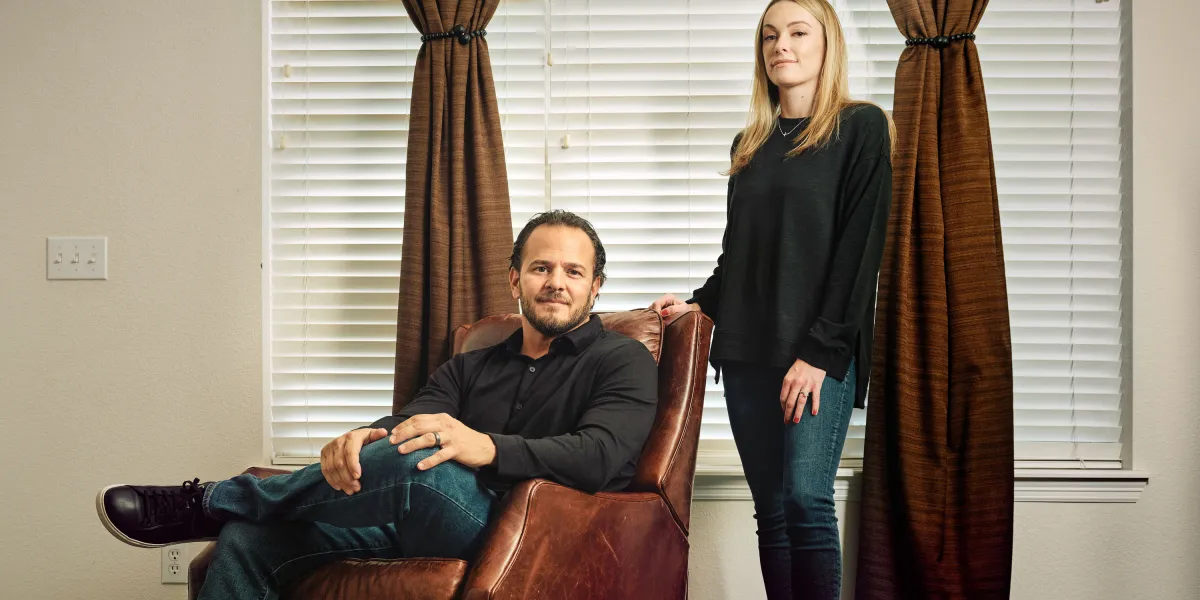
This article was produced in partnership with Type Investigations and with support from the Fund for Investigative Journalism. When Eli Regalado first heard God speak to him, he wondered whether he was hallucinating. Now he likens the experience to having “a thought that is not my thought.” Divine words echo in his mind like a line from a movie or the memory of a loved one’s voice. “It’s not ‘You better do this,’” he says. “It’s just a knowing inside you: This is what you do .” Holy messages arrive daily while Eli is praying, reading, or watching television. Sometimes they surface in prophetic dreams or missives from strangers. Occasionally, they appear midsentence, when he pauses to ask, “Lord, what do you want to say here?” Eli’s wife, Kaitlyn, tends to get heavenly dispatches in the shower, when she finally has a moment to herself. Other times, she seeks counsel from above. “I’ll be writing in my journal and praying and asking questions and just believing what I’m hearing is Him,” she says. God’s directives have been manifold. According to the Regalados, He told them to get married, buy a house, and start having kids. When Eli owned a marketing firm in Colorado, He told him what to name it, whom to hire, and which clients to take on. Then God told him to start preaching in his living room and online. Always, the couple obeyed. In 2021, when Eli was 41 and Kaitlyn was 28, divine guidance steered them in an unexpected new direction: crypto. That October, the Regalados later testified in court, Eli’s sister and her husband gifted the couple some of their holdings in a little-known digital coin. “Take this to my people for a wealth transfer,” Eli heard God say. He and Kaitlyn felt that they were being called to sell the cryptocurrency to fellow Christians. Later, though they had no background in crypto, they came to believe that God wanted them to launch their own coin. Learning as they went, the Regalados created a new cryptocurrency called INDXcoin, which they promoted through family, friends, and contacts in evangelical Christian circles. “I was really feeling that this is the wave of the future,” says Debbie Bonilla, a retired pharmacy technician in her 70s who bought INDXcoin with her husband, Jose. The couple learned about the currency through friends—a minister and his wife, who had also invested. “We just trusted that their judgment was good,” Jose says. Starting in November 2022, Debbie and Jose withdrew a total of $70,000 from their retirement accounts—a large share of their nest egg—to buy INDXcoin. In all, more than 500 people handed over a total of more than $3 million to the Regalados. But within a year after the Bonillas bought in, the project collapsed. Investors who had entrusted the Regalados with large sums of cash lost it all, leaving many to wonder where the funds went and some to question whether they had fallen victim to an elaborate fraud. “Poof—the money just evaporated,” Debbie told me. “Like, how does that happen?” Though Eli believed God was leading him into crypto, he claims he was initially apprehensive. “Absolutely not,” he recalls thinking. “I don’t know anything about cryptocurrency, and I don’t want to be caught up in some church scam.” The crypto market was booming, and the Regalados knew people who’d made a fortune investing in early-stage coins. But a growing interest in digital assets also meant a rise in crypto fraud. In 2025, crypto scammers collected at least $14 billion worldwide, a 17% increase from the previous year, according to blockchain analytics firm Chainalysis. And in the United States, victims of fraudulent crypto investment schemes reported $7.2 billion in losses to the FBI. Fraud is on the rise partly because many people who invest in crypto don’t fully understand how it works, and launching digital coins is relatively easy. More than 3 million cryptocurrencies were minted in August 2026 alone, according to the website CoinMarketCap. “It’s just something anybody can create,” says Jason Ghetian, a former FBI special agent who has served as an expert witness in crypto cases. In the US, much of the crypto market lacks the oversight and investor protections in place in traditional finance, including rules around transparency and safeguarding customer assets. “There isn’t adequate disclosure; there’s fraud, there’s manipulation of the price, there’s conflicts of interest,” says Timothy Massad, former chairman of the US Commodity Futures Trading Commission (CFTC). The sector is overseen by a tangled web of state and federal regulators, including the CFTC, the Securities and Exchange Commission, the Financial Crimes Enforcement Network, and others. But “every agency has its own tests and definitions,” says Carol Goforth, a law professor at the University of Arkansas who has written a textbook on crypto regulation. “It is a complicated, fragmented, and often inconsistent approach.” After the industry spent around $135 million backing crypto-friendly candidates in the 2024 election cycle, the federal government significantly scaled back enforcement efforts. Last year, the Justice Department disbanded its unit focused on crypto crimes, and the Trump White House created a working group aimed at “eliminating regulatory overreach on digital assets.” The SEC has dropped or retreated from the majority of its active lawsuits against crypto firms, including many with financial ties to the president, the New York Times reported. Donald Trump and his family have netted at least $2.3 billion from their crypto ventures since his reelection, Reuters recently estimated. In August 2026, the SEC proposed new rules that would narrow the circumstances in which crypto transactions fall under securities laws, further limiting the agency’s oversight of the industry. “Any future enforcement will have an uphill battle,” Goforth says. Even when crypto projects operate aboveboard, prices are often driven by speculation, and large swings are common. Investing in crypto comes with considerable risk, experts say. “With the exception of stablecoins, crypto assets are essentially Ponzi schemes,” says Hilary Allen, a law professor at American University. “There is nothing behind them—no cash flow, no productive capacity—so the only way they can be more valuable is to draw more people in.” In recent years, state and federal authorities have brought a series of cases against people they allege ran crypto scams that targeted religious communities—an example of what’s known as affinity fraud. Among them are a couple accused of using faith-based appeals to defraud primarily Haitian immigrants of more than $1 billion, an Instagram influencer who took in over $12 million from Muslim followers, and a Miami pastor charged with stealing millions from his Spanish-speaking congregation. “‘God told me’—who can argue with that?” Ghetian says. “The ties you have with other people—the trust you have—is what the people who are running the scam play on,” says Tung Chan, commissioner of the Colorado Division of Securities. In a civil case filed in January 2024, she accused the Regalados of using investors’ Christian faith to dupe them into buying crypto that was “essentially worthless.” The suit, filed in Denver District Court, alleged that the couple spent around $1.3 million—nearly 40% of the funds they raised—on personal expenses. Purchases included high-end vacations, designer clothing, jewelry, cosmetic dental work, a Range Rover, an au pair, and extensive home renovations. In her lawsuit, Chan contended that the couple’s “drive to make money” was matched only by “their reckless disregard of securities laws and profound lack of scruples towards their investors.” Then, in July 2025, Denver’s district attorney charged the Regalados with 40 felonies, including theft, racketeering, and securities fraud. If convicted, they could face decades in prison. But the couple maintain that they haven’t done anything wrong and were simply carrying out God’s wishes
فتح الخبر الأصلي