Pressure sensors can help improve robotic gripping accuracy
From first contact through surface deformation, load distribution, and final stable hold, pressure sensors can improve robotic bin picking. The post Pressure sensors can help improve robotic gripping accuracy appeared first on The Robot Report .
لماذا يهم هذا الخبر؟
سيظهر الملخص التحليلي هنا بعد اكتمال معالجة الذكاء الاصطناعي.
سياق الخبر
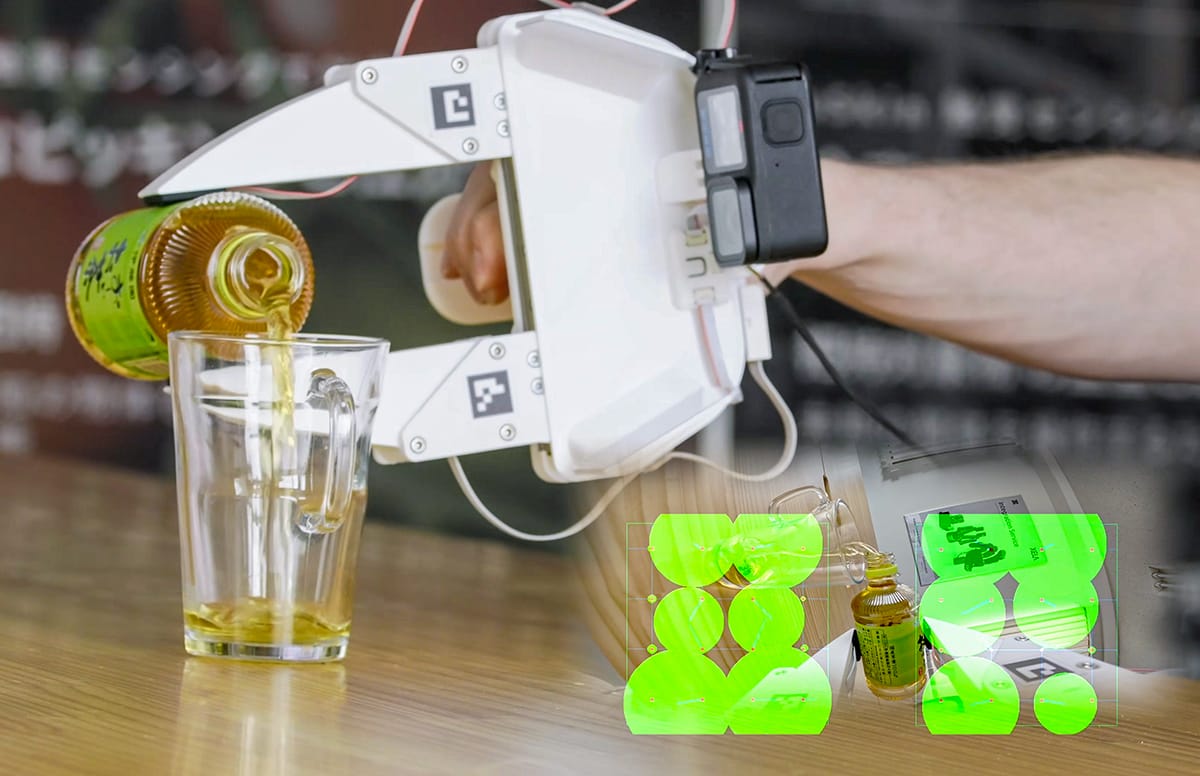
UMI gripper equipped with uSkin sensors and real-time tactile data visualization. Source: XELA Robotics Robotic gripping rarely fails because of a lack of mechanical strength. It fails because the system does not truly know what the fingers are doing at the moment of contact. That gap between commanded motion and actual interaction with the object is where pressure sensing has quietly become one of the most important layers in modern gripper design. In industrial robotics, especially in bin picking, kitting, and mixed-part handling, gripping is no longer a binary event. It is a continuously evolving interaction: First, contact surface deformation, micro slips, load redistribution, and finally stable hold or failure. Pressure sensors sit right inside this interaction loop and provide the missing signal that position and motor current alone cannot reliably infer. What pressure sensors actually measure in robotic gripping In robotic hands and grippers, pressure sensors are not measuring force in the classical sense. They are measuring distributed mechanical stress at or near the contact interface. Depending on the implementation, this may come from piezoresistive films, capacitive layers, or microfluidic structures embedded in compliant finger pads. What matters in practice is that they respond locally to surface loading, not just global joint torque or actuator effort. This distinction is important. A gripper can apply the same motor current and finger displacement to two completely different objects and get two very different pressure distributions. A rigid metal part will concentrate load at a few contact points. A soft polymer part will spread it out. A fragile carton may collapse asymmetrically long before any meaningful change appears in motor torque feedback. Pressure sensors capture these differences early, often within the first few milliseconds of contact. That early signal is what allows the controller to transition from motion control into interaction control with better timing and less overshoot. Register now and save on your pass to RoboBusiness 2026 Pressure sensing versus force and tactile sensing in practice Force sensing and pressure sensing are often grouped together, but they behave differently once they are embedded into a gripper system. A force-torque sensor mounted at the wrist gives a global measurement of interaction forces between the robot and the environment. It is useful for detecting overall load but it cannot resolve what happens at individual fingertips. If one finger is slipping while another is overloading, the wrist sensor may only show a stable average. Tactile sensors, depending on how they are designed, can provide richer spatial resolution, sometimes even approximating contact maps. However they are often more complex, higher cost and require denser data processing. Pressure sensors sit in between these two extremes. They are local enough to detect uneven loading across a finger pad but simple enough to integrate into real industrial grippers without overwhelming the control system. In many deployed systems, pressure sensing is not replacing force or tactile feedback; it is stabilizing the middle layer where most gripping decisions actually happen. Placement inside the gripper and why it matters Where you place pressure sensors inside a gripper is not a mechanical detail; it defines what kind of control problem you are actually solving. The most common configuration is embedding sensors into elastomer finger pads. This gives direct contact measurement but introduces mechanical filtering because the soft layer deforms before the sensor reacts. Engineers often use this on compliant grippers where the goal is gentle handling. Another approach is placing sensors behind a rigid contact surface with a thin compliant interface layer. This improves durability and reduces drift from mechanical wear, but it slightly reduces sensitivity to micro texture and slip initiation. In high-speed pick-and-place systems, some designs distribute multiple pressure sensing zones along the finger length. This allows the controller to distinguish between tip contact and full palm contact. That difference is critical when grasping irregular objects where a stable grip might require intentionally biased contact rather than uniform force distribution. Placement also affects failure modes. A sensor placed too close to the structural backbone of the finger will often under report edge loading. A sensor placed too close to the surface may saturate quickly or suffer from hysteresis due to material fatigue. In practice, most successful industrial designs end up as a compromise between mechanical protection and signal fidelity. Pressure sensors are one option for dexterous robotic grasping. Source: Faisal Mahmood Signal calibration drift handling and filtering Raw pressure sensor signals are rarely usable without processing. Even in high-quality sensors, the output is influenced by temperature drift, material aging, and mechanical preload from assembly. Calibration typically begins with zero-load referencing under known unloaded conditions. But this is only the first step. In real systems, the more difficult problem is maintaining calibration stability over time. Elastomeric materials used in finger pads exhibit creep, meaning the baseline pressure reading can shift after sustained loading. Engineers often implement dynamic recalibration routines that adjust baseline values during idle states. This works well in structured environments where the robot has frequent opportunities to reset its contact state. In unstructured environments, more conservative filtering is required. Filtering itself is not trivial. A simple low-pass filter can remove noise but also delay slip detection, which is one of the most important real time signals in gripping. More advanced systems use adaptive filtering where the cutoff frequency changes depending on whether the system is in approach contact or hold phase. In some designs pressure signals are fused with motor current and joint position data to improve robustness. This is not just sensor fusion for redundancy; it is a way to reconstruct missing dynamics. For example a sudden increase in pressure without corresponding joint movement may indicate an external constraint or early jamming condition. Feedback control and how pressure data changes gripping behavior The real value of pressure sensing becomes clear in the control loop. In a basic gripper the control strategy is often position based: move fingers to a target closure distance and assume the object is held. This approach works in controlled environments with consistent object geometry but it fails quickly when variability increases. When pressure feedback is introduced the control system shifts toward force aware or pressure regulated gripping. Instead of targeting a fixed position the controller adjusts actuator effort until a desired pressure profile is achieved. This allows the gripper to handle variation in object size without over constraining the part. It also improves safety in human robot collaboration scenarios where excessive grip force can cause injury or damage. Slip detection is where pressure feedback becomes particularly important. Slip does not always produce a large force change but it does produce characteristic micro variations in pressure distribution. A slight drop in localized pressure combined with high frequency oscillation is often an early indicator that the object is beginning to move relative to the finger surface. Once slip is detected the controller can respond in several ways: increasing normal force, adjusting finger angle or redistributing contact points if the gripper has multiple degrees of freedom. The key point is timing. Without pressure sensing slip is often detected too late after the object has already moved beyond recovery. Common engineering problems in real deployments Despite its advantages pressure sensing introd
فتح الخبر الأصلي