How Sonos rebooted itself
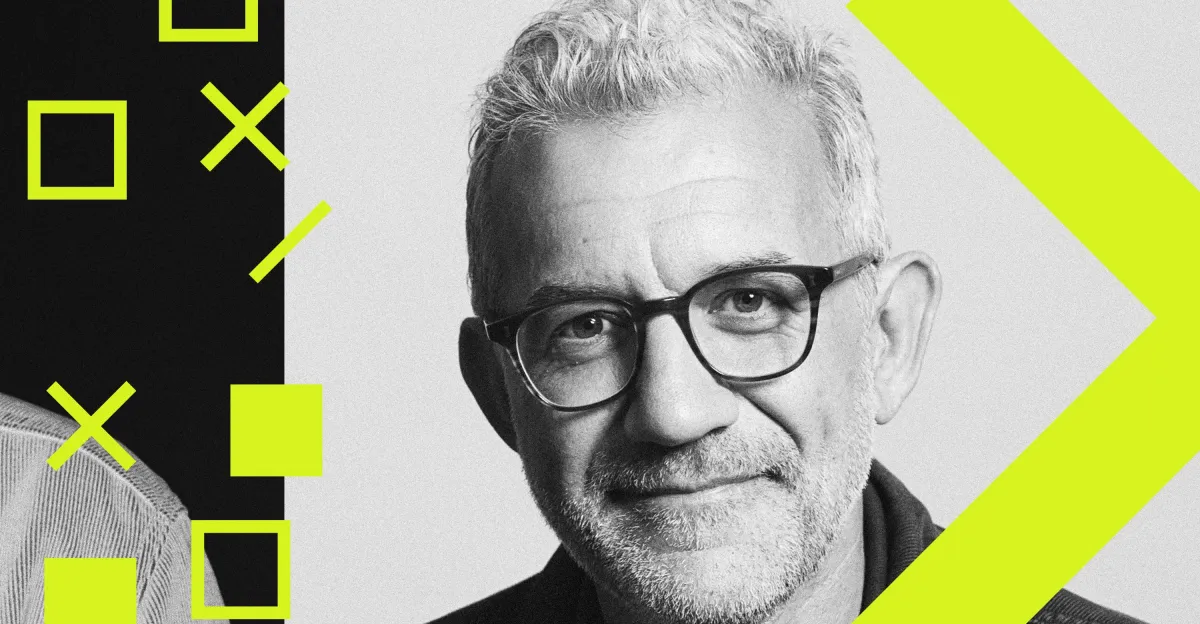
Today, I’m talking with Tom Conrad, the CEO of Sonos. Tom and I have known each other for a long time — he was the chief technology officer of Pandora, VP of product at Snap, and the chief product officer of Quibi. He was also on the board at Sonos during its disastrous 2024 app […]
لماذا يهم هذا الخبر؟
سيظهر الملخص التحليلي هنا بعد اكتمال معالجة الذكاء الاصطناعي.
سياق الخبر
Today, I’m talking with Tom Conrad, the CEO of Sonos. Tom and I have known each other for a long time — he was the chief technology officer of Pandora, VP of product at Snap, and the chief product officer of Quibi. He was also on the board at Sonos during its disastrous 2024 app redesign that threatened to crash the entire brand. Tom took over as interim CEO to right the ship during that period, and then took the permanent role just about a year ago. As you’ll hear him say, he thinks Sonos is fully out of that period now, and on to its next chapter with a huge product and platform launch called Sonos 27 . Verge subscribers, don’t forget you get exclusive access to ad-free Decoder wherever you get your podcasts. Head here . Not a subscriber? You can sign up here . I mean, come on, you all listen to the show. That is all the most Decoder bait imaginable. I have been dying to have Tom on the show to talk about how the board decided to move on from previous CEO Patrick Spence, how he diagnosed the issues inside the company, and what decisions he made to fix them. Those fixes involved a lot of big changes: to the company’s structure, its product lineup, and how it thinks about itself and what its product fundamentally is. That’s that new platform, Sonos 27, which you’ll hear Tom call a new foundation for the company that makes every Sonos product work better as part of a system. There’s a lot here, including how AI assistants can work across the system, the idea of having a mesh network of little computers in your home disguised as speakers, and of course, the testy relationship between Sonos and Google, which means Google’s Gemini assistant isn’t available on Sonos devices. Oh, and of course we got into the weeds about smart home standards, because I am a smart home nerd and simply cannot help myself. But to his credit, Tom was willing to nerd out with me, and I think this conversation is pretty fun because of it. Okay: Sonos CEO Tom Conrad. Here we go. This interview has been lightly edited for length and clarity. Tom Conrad, you’re the CEO of Sonos. Welcome to Decoder . Thank you. As they say, it’s so great to be here. I am just going to say, finally, I have been asking you to be on the show for at least a year, if not before. I think the first time I met you was in the back of a car at CES when you were at Pandora. Sounds right. One hundred years ago. One hundred years ago. We were children. [Laughs] We were little babies. That car was driven by a human driver. That’s how far back it was. That’s right. And then you took a turn through Quibi. You and I talked through that, and now you’re at Sonos. As you know, I’m a huge fan of Sonos. We had your predecessor, Patrick Spence, on the show a bunch of times . Many things have happened, so I just want to start at the very beginning of this. You’re about a year into being the permanent CEO of Sonos. You have a bunch of news to announce. Just tell us what you think Sonos is today. What is your conception of this company? When I came in the door, one of my earliest observations was that the company behaved like it was 100 percent hardware, but we’re really 100 percent hardware and 100 percent software. And if you get either one of those even a little bit wrong, the impact is tremendous. So how does that show up really day-to-day? It was about returning the company to the idea that Sonos doesn’t make these individual products, but we really make one thing — we make the Sonos system. It all has to hang together in a cohesive, interesting, and valuable way, or we’re just not doing the work. There’s been a bunch of basic blocking and tackling, of course, both operationally and in the work that we’re doing in the product family. But at the highest level, returning the company to the idea that we are a system for audio in the home has been the highest-level mantra. When you say come into the company, do you mean as a board member or as the CEO? I mean, let’s start the starter pistol in January of 2025, 18 months ago, when I stepped in first as interim CEO and then was lucky enough six months later to be asked to take the job more permanently. The reason I asked that question is that you obviously have two different views of the company in different roles. We did have former CEO Patrick Spence on several occasions, and he said something very similar to me when he first took over — that Sonos was stuck in its ways. It was really focused on very, very slow iterations of hardware. He tried very hard to push the metabolism of the company to be much faster, and he talked about that very openly with me. That led eventually to what I think is a moment of true crisis: the app launch. It was a disaster. The system stopped working. That’s when you came in to right the ship. Tell me about that gap. You came in, and you said this company thinks it’s a hardware company. That’s what your predecessor had been saying, but it went sideways in big, meaningful ways. Tell me about that moment and why you think it was the same conception even when you came in. So as you describe, I’ve been involved with the company going back almost 20 years. We brought Pandora to Sonos in 2007, I think, and I was able to get to know the company as a partner before I got to know it as a board member. I came onto the board in 2016 right as Patrick became CEO. So from the vantage point of a board member, I got to participate in Patrick’s chapter. I guess the way I would characterize his high-order thinking about the company in those early days was that, as you described, he wanted to turn the company into a product execution machine with an emphasis on hardware products. We call them NPIs, or new product introductions. In the chapter before him, it was sometimes years between new Sonos products. Spence said, “Look, we’re going to make a company that knows how to ship a couple of great new products a year.” And he did that. I mean, the company has reliably shipped a couple of great products, hardware products, every year, for close to a decade now. Sometimes, when you energize an organization around an idea, there are unintended consequences. I think one unintended consequence of that framing was that the company became very focused on the individual products, one at a time. Even as a board member, I received Roam as a portable speaker with a certain amount of battery life, waterproofing, and Bluetooth connectivity. I didn’t really think about it as a member of the Sonos system. Even with the software work that we did, and with every product that we make, there is a tremendous amount of software effort and innovation that goes into them. But even the software that we made was very focused on the individual NPIs. “What can we do in software to differentiate Move 2 from other speakers in that category?” What was hard to do, and what was hard to prioritize in the company, was horizontal slices of software experiences that benefited all of the platform. So, in a way, I think some of that debt accumulated, and the company thought that the antidote was to recreate the app experience. And as you know, we made a bunch of mistakes at that moment. I’m really proud of the fact that I think we’re well beyond that chapter now, but we could have been much more thoughtful about how we qualified that product in the real world. We could have been much more thoughtful about how we rolled it out to customers. We could have, candidly, I think, examined the original impetus in the first place. It was very Sonos-motivated. We wanted to put the app on a modern architecture to make us more nimble. In my chapter at Sonos, I’m really trying to bring it all back to how we can focus on the customer first. I’m so inspired by talking to people on social media and in my inbox, and people in the industry, like you, about how we show up and solve the real problems that are happening in real households. I’m so excited about the things we’re going to talk to you about today because I think
فتح الخبر الأصلي