It’s about ethics in journalism, with Ben Smith
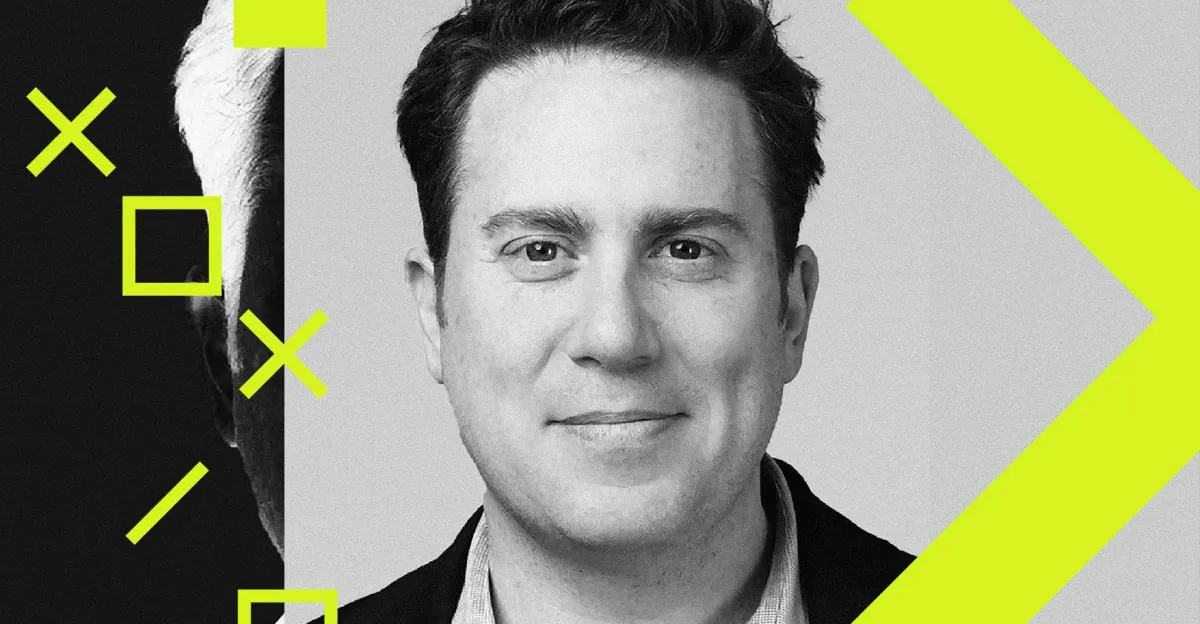
Today I’m talking to Ben Smith, the editor-in-chief of Semafor. Everywhere you go, people say they don’t trust the media — and yet they’ve never consumed more of it. Audiences have moved on from legacy names in favor of Substacks and podcasts and TikTok news influencers that seem to be everywhere in our feeds. Why […]
لماذا يهم هذا الخبر؟
سيظهر الملخص التحليلي هنا بعد اكتمال معالجة الذكاء الاصطناعي.
سياق الخبر
Today I’m talking to Ben Smith, the editor-in-chief of Semafor . Everywhere you go, people say they don’t trust the media — and yet they’ve never consumed more of it. Audiences have moved on from legacy names in favor of Substacks and podcasts and TikTok news influencers that seem to be everywhere in our feeds. Why would anyone want to start a new global news organization in the middle of all that, when even once-storied brands like CBS News can’t seem to figure it out? Well, that’s what Ben did four years ago. He’s the guy who ran BuzzFeed News at the height of the Facebook traffic boom, and even wrote a book about it, called Traffic , which he discussed with me on Decoder back in 2023 . Verge subscribers, don’t forget you get exclusive access to ad-free Decoder wherever you get your podcasts. Head here . Not a subscriber? You can sign up here . Around that same time, he cofounded Semafor , which launched in 2022 with a stated goal of reaching 200 million college-educated readers . You’re going to hear Ben say that since then, Semafor has evolved into what he calls an anti-scale company. It still doesn’t have a website paywall, but it makes about half its money in the convening business — that’s what media types have taken to calling events lately. And Semafor throws some big events. It actually has a new one called Silicon Valley & The World , which will feature some of the biggest names in tech and AI. That’s part of the events business: hosting the subjects you cover on your big event stage. So I wanted to know how that all works, and what it feels like to navigate the ethical conflicts that seem to be everywhere in media right now. In particular, I wanted to dig into how Semafor’ s newsroom is approaching AI, the ethics and optics of putting people you cover on your conference advisory boards , and whether independence is still something an audience is willing to pay for. Ben and I usually hash this stuff out over beers, and I think you can tell we really enjoy getting into all this together. Okay: Semafor editor-in-chief Ben Smith. Here we go. This transcript has been lightly edited for length and clarity. Ben Smith, you’re the co-founder and editor in chief of Semafor . Welcome back to Decoder . It is really nice to be back. I’m excited to talk to you. You were on the show three years ago, just as Semafor was launching. It was right as Buzzfeed News , which you founded and ran for a long time, was shutting down . I keep talking to media CEOs about what is going to happen. It feels like you have figured something out at Semafor . How are things going over there? Things are going incredibly well, and knock on wood as I say that, but I think we figured something out. There are a lot of different things to figure out, and we’re in this unbelievably strange and unstable moment in media. But I do think we’ve figured out a model that is quality journalism built around great journalists, paired with really large scale convening that is building both great journalism and a really good business, a profitable business — which is something that is, to me as a former BuzzFeed executive, novel. A profitable digital media business is in short supply these days. It’s funny, I was looking over our conversation from three years ago . You had just published your book Traffic , which was basically about what I would call the millennial digital media moment and everyone chasing massive scale. “The platforms are going to deliver tons of traffic to us and then we’ll collect pennies and we’ll all get rich.” This was a pretty common thesis. It feels like you’re saying you’ve turned away from that. You’ve learned the lesson of that time. Our chief revenue officer, Rachel Oppenheim, likes to joke that my next book will be called No Traffic , but we are really building an anti-scale business. The luxury of starting in that moment, in the rubble of the traffic apocalypse, was obviously not the path to success. We had to think a lot about targeting and building a very specific audience. The thing that I have kind of come to realize in all these conversations… I listen to your show. We have a show about media that we yap about this on. What’s the future of media? Is it live? We were just talking about it. Who knows? But in journalism, I have a lot of conviction that great stories aren’t going anywhere. The need for high-quality insight isn’t going anywhere. Great reporters aren’t going anywhere. What surface this all lives on is up for grabs, and you can’t be too ideological about that. You say surface, I always say distribution. Yeah. A theme on Decoder that we come back to over and over again is your distribution shapes what you make. It’s just inevitable. The medium is the message, to borrow that framing. If surfaces — if distribution — are up for grabs, what are you holding onto? I actually don’t buy that thesis, or at least I’m resisting that thesis because for the audience, the pull of distribution is incredibly powerful. The core thesis of BuzzFeed was we cracked the distribution and built for the distribution. Maybe I’m overreacting a little to that, but we definitely think all the time about how we want to reach political leaders and business leaders. We want to reach nonprofit leaders, and we want to reach people making decisions. We want to reach them in person. We reach them a lot in email. We reach them on the web, we reach them in video, but we’re thinking about that same audience across media, and in fact, I think video is particularly interesting because of the pull. Videos are placed on the web in terms of the place you can get massive scale. Then conversely, where there’s a pull of massive scale to create the biggest pull is just to be hyper-polarizing and find ways to create polarizing confrontation. That’s how you go viral, or one of the best ways at least, and we’re trying hard to build the discipline to resist that pull of distribution. We’re already deep into the weeds. I hope that listeners can tell Ben and I like talking to each other about these things. Please visit Semafor.com. [Laughs] I’m excited to play some clips for you. So I’m glad that you said you were reacting to BuzzFeed . A few months ago we had Jonah Peretti on the show , and right after he had sold BuzzFeed to Byron Allen and the Weather Channel . There’s a lot going on there. In full disclosure to the audience, I literally had a beer with you just before I sat down with Jonah. I remember. I did not ask the questions you told me to ask, but he said— Were they about running? That’s another show. I didn’t do it. I was quickly in the weeds of Jonah as well, and I put to him what I think of as the original sin of digital media, which is that I think Jonah thought he could go so viral so consistently that he could crack distribution and that Mark Zuckerberg and Facebook would pay him money. I’m going to play for you what he said to me in response to that, and I just want to get your reaction to it. Can we go ahead and play it? Jonah Peretti: Yeah. I mean, first, just as a factual matter, we did get paid millions of dollars by Mark Zuckerberg. The prediction that they would pay for content was accurate, but it was just short-lived. So we got paid for that exploding watermelon. Okay, so he said that to me and I said, “Yeah.” That was a good day in the office. It was a great day in the office, I’m guessing, but everyone knew that Mark Zuckerberg wasn’t going to pay forever. I agree with Jonah on this. Looking back, we all say the social platforms were obviously going to always be dependent on UGC and never pay for anything, and these media companies building on social platforms never made any sense. It’s worth remembering these investors’ experience had been shaped by cable, which was a different distribution platform in which companies like Viacom, ESPN, CNN, and MTV had built huge businesses on the back of this new distribution. So they said, “Here’s another new distribution. We’re going
فتح الخبر الأصلي