Bluesky’s new CEO wants a big tent, not a bubble
Today, I’m talking with Toni Schneider, who is the brand new CEO of the social platform Bluesky — he formally took over after a short stint as interim CEO. This is one of my favorite kinds of interviews to do on Decoder, because a couple years ago, we had Bluesky’s prior CEO, Jay Graber, on […]
لماذا يهم هذا الخبر؟
سيظهر الملخص التحليلي هنا بعد اكتمال معالجة الذكاء الاصطناعي.
سياق الخبر
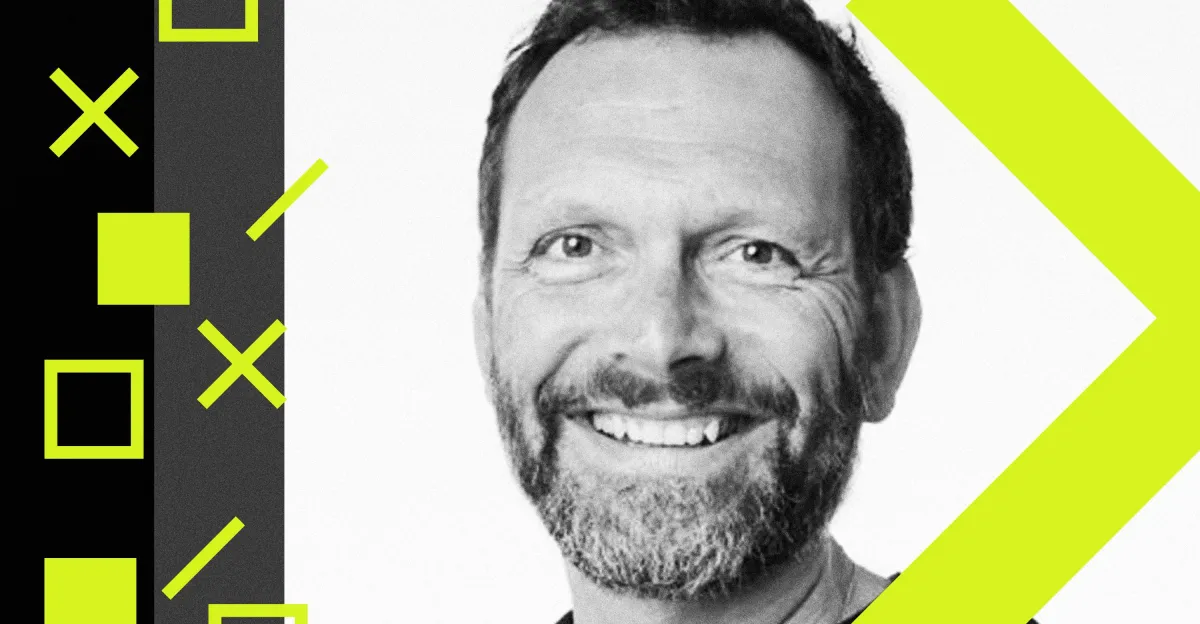
Today, I’m talking with Toni Schneider, who is the brand new CEO of the social platform Bluesky — he formally took over after a short stint as interim CEO. This is one of my favorite kinds of interviews to do on Decoder , because a couple years ago, we had Bluesky’s prior CEO, Jay Graber, on the show — she’s now the company’s chief innovation officer, and all of that kind of shuffle is pure Decoder bait. And a new CEO often brings with them new priorities, which is perhaps the most Decoder subject of all. Bluesky in particular is a company pulling in a lot of different directions: There’s a Twitter-like social media app, which is what most people are familiar with, and then there’s the underlying technology behind that app call AT Protocol, which allows anyone to build social networking products that interoperate with Bluesky. As you’ll hear Toni say, that ecosystem is vibrant and growing — it’s called the ATmosphere, which is adorable. But the users of Bluesky the app are not the same as the people building on AT Protocol, and the goals of a company founded to push forward the ideas of open and interoperable social standards are not necessarily aligned with the things all those users might need or want. This is a fight that bursts into view on Bluesky itself all the time, and I wanted to know how Toni thinks about balancing all of that with what remains a fairly small team. Verge subscribers, don’t forget you get exclusive access to ad-free Decoder wherever you get your podcasts. Head here . Not a subscriber? You can sign up here . Toni was formerly the CEO of Automattic, which makes the huge WordPress web content management platform, and you’ll hear him make the case that this period in social networking feels a lot like the early days of the web, and that success looks like a vibrant ecosystem with lots of big players that might take a decade to fully develop. That’s quite a vision, but here and now, the open web is falling apart, and the social products of today are fragmenting and in many cases either get smaller or full of AI slop. So we talked about all of that, and about Bluesky’s reputation as a bastion of leftists insulated in their own little bubble sitting next to the increasingly hard right bubble of X. And of course, we talked about how Bluesky might start to generate revenue — and interestingly enough, it’s not just ads. This is a fun one that touches on almost every Decoder theme there is. I think you’re gonna like it. Okay: Bluesky CEO Toni Schneider. Here we go. This interview has been lightly edited for length and clarity. Toni Schneider, you are a venture partner at True Ventures, and more importantly, the now permanent CEO of BlueSky. Welcome to Decoder. Thank you. Thanks for having me. I am very excited to talk to you. What is happening with the open social web is maybe the most important thing happening for media. It does not get as much attention as AI, but there’s something very big happening on these interoperable social networks. I know that you are a believer in it in the same way that you believed in the web when you were the CEO of Automattic, which is the company that makes WordPress. So let’s just start at the very start. Describe what you think BlueSky is today and what you think the opportunities with these new kinds of networks are. BlueSky today is really two things. There’s the BlueSky app, which is what a lot of people are familiar with. It’s a social network. We think it’s a better social network. It’s more human focused, doesn’t have ads. It doesn’t have algorithms. But more importantly, underneath BlueSky is an open protocol called AT Protocol. And BlueSky is only one of now over a thousand apps built on that protocol. The whole point of BlueSky was to demonstrate that this open protocol could scale and attract other builders, building lots of apps, lots of social experiences that all interoperate and connect with each other, which is what we believe the future of social media should look like. It’s what is actually going to make social media something that we believe in, which is that the future of social media should serve the public good. That is what motivates us, and that’s why we built the protocol first and then the app. There’s a lot in there already that is just pure Decoder bait, including the notion that BlueSky, the product, and the ATmosphere and AT Protocol, the standard, are all intermixed in one company that you now run. Right next to that is maybe the purest Decoder bait of all: the fact that Jay Graber, who was the CEO of BlueSky – she was on the show about two years ago – stepped down into the role of chief innovation officer. You were the interim CEO, and now after four months, you are the full-time CEO. Fundamentally, that is just the story that Decoder loves to tell the most. Talk me through that. What made you step in as the interim CEO, and why did you decide to become the full-time CEO? It’s actually really cool and inspiring that a founder, after she worked on this for six years, got it off the ground. She started inside Twitter, got it out of there, made it an independent thing. There are a lot of reasons why BlueSky is facing long odds and she got into this place, and then felt like it’s at a scale now where [it’s in] her sweet spot, the things that she loves working on, which is vision, innovation, new ideas. She felt pulled back towards building, especially also because of the advent of AI and how AI and AT Proto can interoperate. She felt like that’s what she wants to go work on, and it’s time to find somebody else for the CEO job. I was already involved with this project because I met the team a little bit over two years ago, probably around the same time Jay was on your podcast. We became investors through True Ventures. So I’ve been following it as an investor, supporting it. The team approached me and said that my background with WordPress and open source was a really good fit. And so I agreed to be interim CEO initially because I was still a general partner at True and it’s a firm I helped build. It’s an amazing firm that I didn’t want to leave behind. But also, at True, we’ve had this model where we’ve moved back and forth between operator and investor. I did that while I was running Automattic. So I stepped into it. After working on it hands-on for a few months, it just got more and more fun, more and more energizing. You just feel the momentum. Also, True just switched to a new fund. So actually the timing was good where I could say, “Okay, I will switch my true role to part-time, become a venture partner,” which is what I used to be when I ran Automattic, “and I’ll go all in at BlueSky.” Tell me about the difference between being the interim CEO and the full-time CEO. When you’re the interim CEO, it feels like there are probably some boundaries in what you can do. And then the full-time CEO can obviously do everything that a full-time CEO can do. What did you feel like the boundaries were as interim CEO? On the inside, it hasn’t felt very different. I actually think the move to drop the “interim” is more important on the outside, especially for the ATmosphere and the AT Proto community, and people building on this platform and in this ecosystem just to say, “No, I’m here for the duration. This isn’t just some interim gig and then somebody else is going to show up.” So I felt like, to the outside, that makes a big difference. On the inside, the job really hasn’t changed much.. So many of my conversations here in Decoder are really about the timescale of decisions. I’ll make the comparison to my newsroom because it’s easy and it’s easy to understand. Our reporters make decisions in like 30-minute increments. A story comes up, they write it, they publish it, they move on to the next thing. I make decisions maybe in like week- or month-long increments. What are we going to cover? Where are the resources going to go? It seems like in the interim CEO role, the timescale of t
فتح الخبر الأصلي